
Iran’s political rights in long view: Nostalgia, trajectory, and sanctions
December 10, 2025 - By Behzad Jeddi
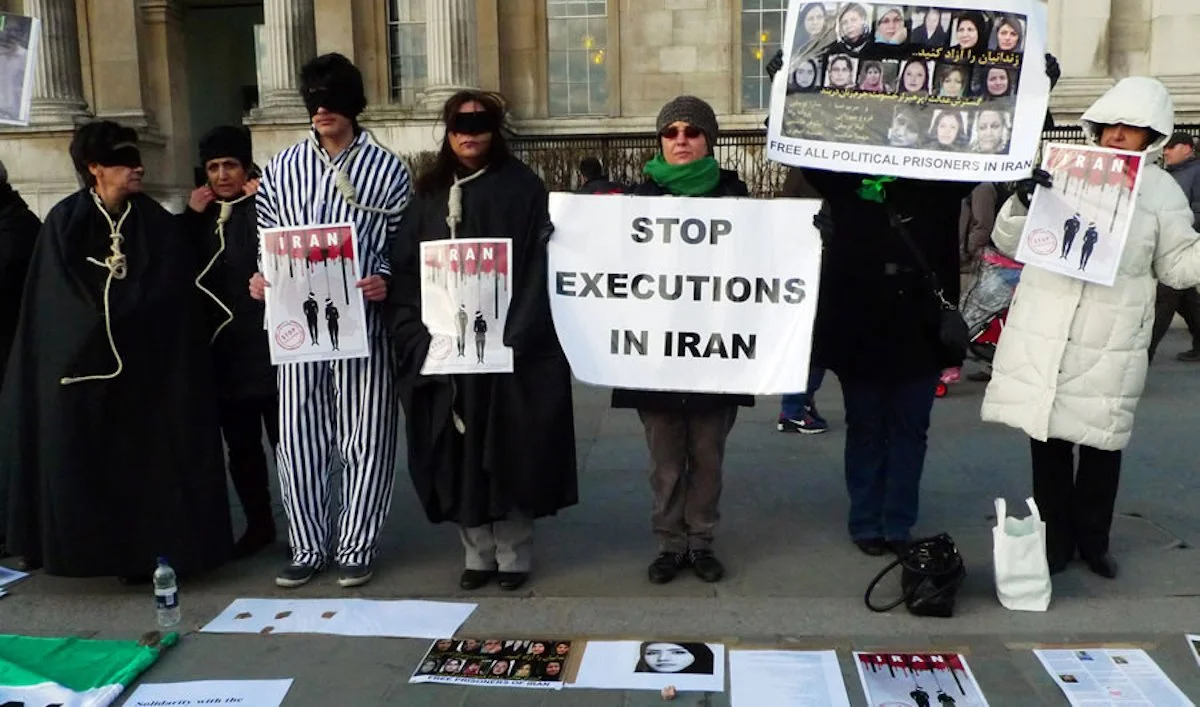
Weekly vigil in Trafalgar Square against human rights violations and political executions in Iran. Photo: helen.2006/flickr.
This short read looks into two prevalent beliefs about Iran’s history, which are (1) nostalgia for the freedom experienced under the Pahlavi monarchy and (2) the notion that sanctions are solely responsible for the current restrictions. Analyzing six decades of Varieties of Democracy data on four rights, including independent news access, civil society space, protection from torture, and political killings, this read compares Iran with neighboring countries. Findings indicate that pre-1979 rights levels were consistently low and did not surpass those of the post-1979 period. The most significant progress occurred during the reform era from 1998 to 2004, while a severe decline followed the contested 2009 election. Notable losses in rights were concentrated around the 1979 revolution and were only partially reversed afterward. Sanctions, which arrive in waves, appear to intensify domestic trends, showing modest improvements during Iran’s Nuclear Deal (JCPOA) period but increasing pressure after 2018, driven by internal politics. The analysis highlights these trends and informs policies aimed at protecting civil society.