
Turkan Bozkurt speaks at Ludovika University of Public Service
December 12, 2025 - IPEK Center
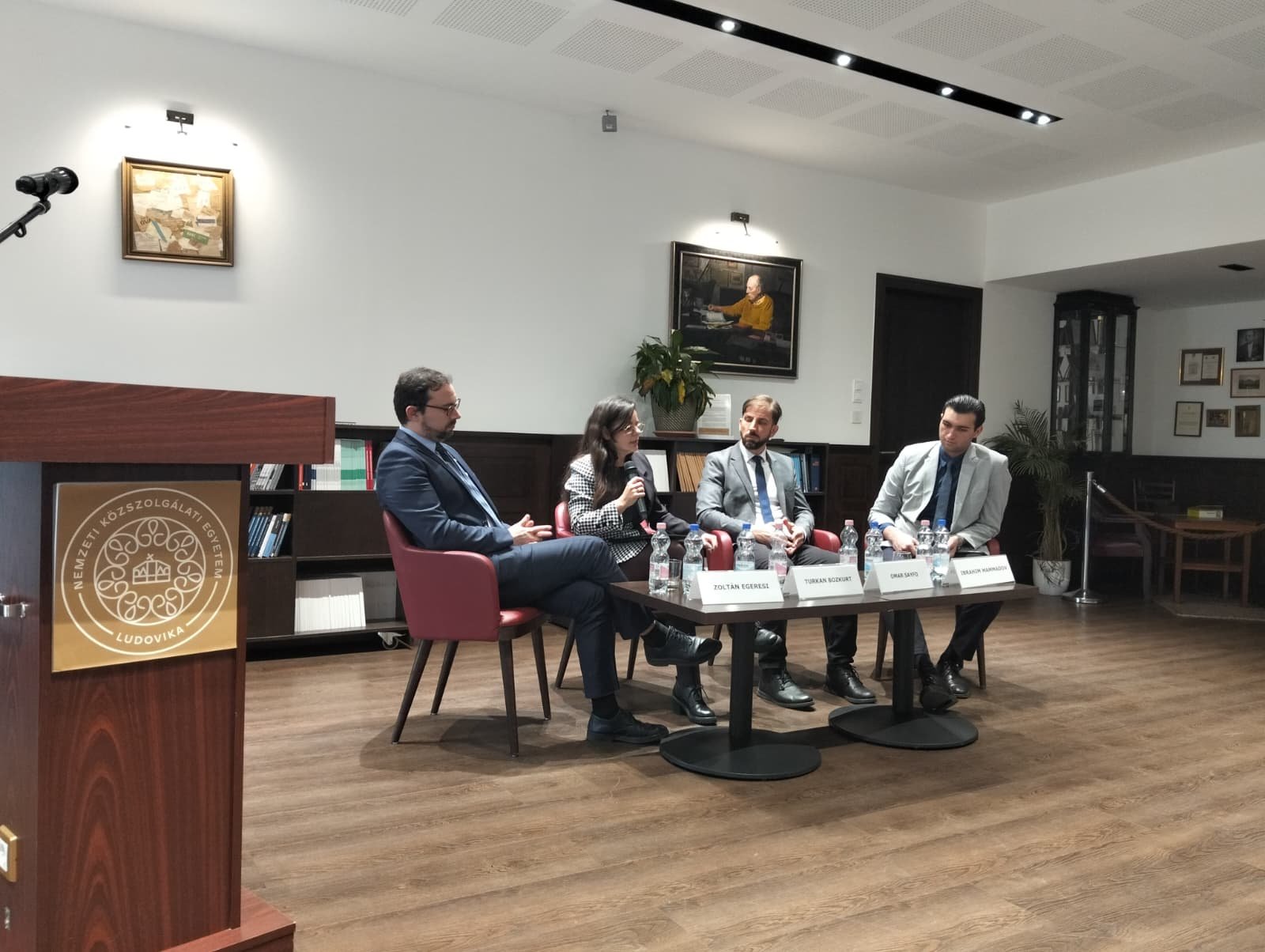
On December 12, 2025, IPEK center co-founder Turkan Bozkurt attended “Conflict and Coexistence in the Near East: Contemporary Dynamics” conference organized by University of Public Service and Topchubashov Center in Budapest, Hungary.
As a panelist in the second session of this program, Turkan Bozkurt was asked about the process of nation-state building and its implications on national minorities in Iran. She answered by discussing the identity politics employed in Iran since the fall of the Qajar Dynasty in an effort to create a Persianized nation-state identity. She emphasized how even after the fall of the Pahlavi dynasty and the arrival of the Islamic regime in 1979, the monolingual and monocultural architecture of power was not dismantled but reinforced, leaving structural discrimination against non-Persian communities unchanged. This process has resulted in the securitization of identity, toponomic changes in the landscape of South Azerbaijan, chronic underinvestment in infrastructure, environmental racism, suppression of cultural expression, and an erasure of non-Persian heritages in Iran.
A question was raised by the moderator for Turkan Bozkurt regarding internal uprisings in Iran, specifically the importance of the 1945-1946 Azerbaijan People’s Government and whether this can be an indication of the failure of nation-state building. Her response discussed recurring patterns of uprisings in South Azerbaijan, such as the movements of Sheikh Mohammad Khiyabani and Sattar Khan during periods of central instability in Iran. The rise and internal success of the Azerbaijan People’s Government reflects a suppressed political alternative to Iran’s centralized nation-state model for South Azerbaijanis. This experience of self-rule demonstrated the viability of governance rooted in cultural recognition and bottom-up political mobilization. Although this short-lived government was violently dismantled by the central forces, it has remained in collective memory due to the modern and egalitarian policies it implemented, which contrasted with the centralized governments.
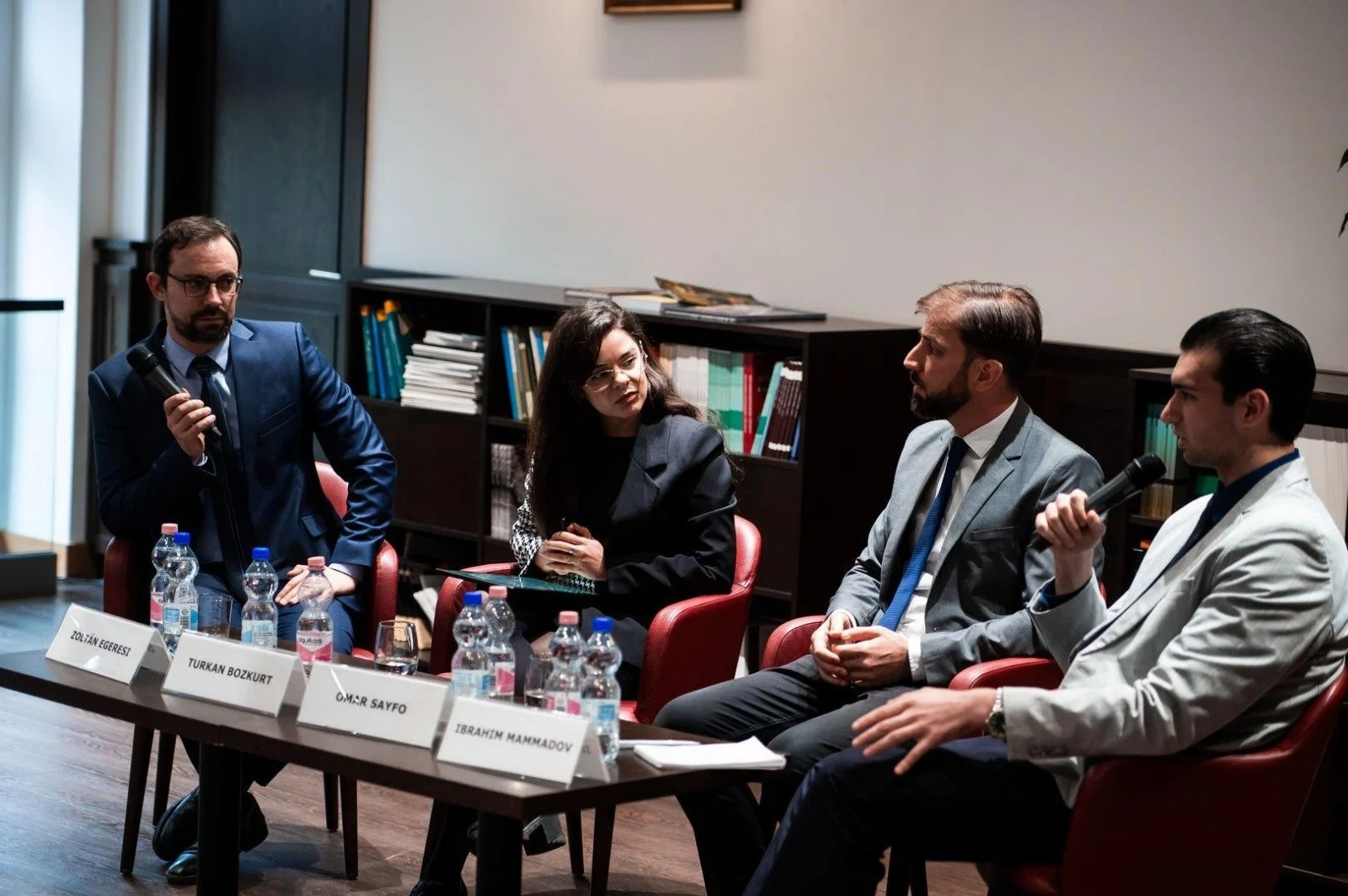
The event continued with comparative discussions by Zoltan Egeresi on interethnic relations in Turkiye and Omar Sayfo discussing interethnic relations in Syria. This was followed by a Q&A session in which Turkan Bozkurt was asked to discuss how systemic discrimination against Azerbaijanis can persist if Ayetollah Khamenei is of Turkic origin and recently elected Masud Pezeshkian identifies as Azerbaijani. In response, she differentiated between individualistic accomplishments and structural oppression. She gave the example that the presence of women among Iranian delegations to the United Nations does not negate the existence of gender apartheid or the treatment of women as second-class citizens domestically. Visibility and inclusion are two separate matters. Moreover, she clarified that the election of Pezeshkian is not related to South Azerbaijanis and has not helped with the struggles of this community as it can be seen by the case of Urmia Lake. Pezeshkian is rather a strategic gateway for Tehran to better its relations with the Republic of Azerbaijan and Turkiye at a time when the Iranian government finds itself in a tight corner with weakened allies and an even weaker axis of resistance.
This event helped bring further visibility to interethnic conflicts in the Middle East and reinforced the urgency of sustained discussions. The conversations on national and ethnic minorities in the region showed the necessity of moving beyond centralized and homogenizing frameworks in order to better understand power structures and address inequalities.