
IPEK Center: U.S. Signals Deterrence on Iran, Keeps Door Open to Diplomacy
January 27, 2026 - IPEK Center
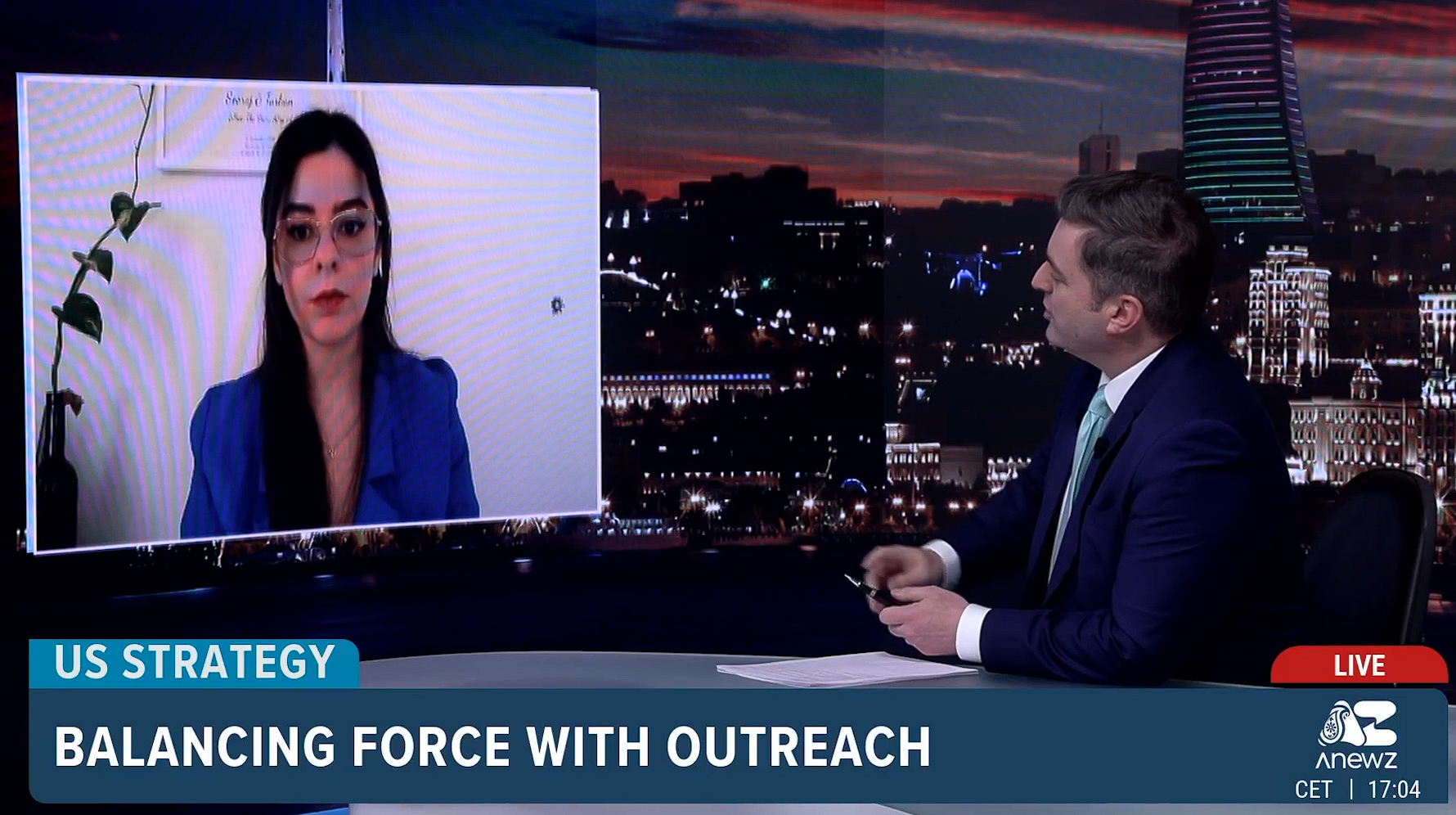
In an interview with AnewZ, IPEK Center assessed that Washington’s current posture combines intensified pressure with continued room for engagement, without a clear public decision to escalate militarily. Recent U.S. force movements, most notably the deployment of the aircraft carrier USS Abraham Lincoln and accompanying warships in the western Indian Ocean appear aimed at strengthening deterrence and expanding operational readiness. This posture also reflects an awareness that Iran retains significant retaliatory capabilities, including missiles and drones that could target U.S. assets across the region, reinforcing the parallel emphasis on defensive preparedness.
IPEK Center Deputy Director Turkan Bozkurt argued that diplomacy remains central to U.S. signaling, with military action framed as a contingency rather than an inevitability. In her assessment, Washington’s priority is less about provoking a wide regional war and more about shaping outcomes in Iran while avoiding state fragmentation or a destabilizing internal conflict that could spill across borders and threaten long standing U.S. regional interests. She also pointed to signs of regional hesitancy, including statements from partners such as the UAE indicating they do not want their territory or airspace used to support a strike, alongside broader regional resistance to escalation.
On Iran’s internal dynamics, Bozkurt said large scale protests appear to have temporarily subsided following severe repression, while stressing that casualty and arrest figures remain difficult to verify due to communications restrictions and uneven reporting. She suggested that selective arrests, particularly in minority-populated areas may be intended to deter renewed mobilization amid rising external tensions. At the same time, Tehran has intensified its warnings of retaliation. Allied nonstate actors aligned with the so-called “Axis of Resistance” have signaled readiness to respond, increasing the risk of escalation across multiple fronts.
The interview also framed the protests as largely reactive rather than centrally coordinated, consistent with patterns seen in previous episodes in Iran. Acute economic pressures and day to day grievances can ignite demonstrations that quickly evolve into political confrontation as they clash with state authority. Bozkurt noted that the initially limited participation in some Azerbaijani, Kurdish and Baluchi areas may reflect a more cautious assessment of the unrest as it unfolded, showing how protest dynamics can vary across regions.
Bozkurt concluded by warning that there is great danger in miscalculation. Whether driven by foreign interference or heavy handed domestic crackdowns that inadvertently widen the conflict, Iran is entering an increasingly uncertain and volatile period. In a crowded regional landscape involving both state and nonstate actors, even measures intended as deterrence can trigger a rapid and difficult to control cycle of retaliation.