
Reports of “Bullet Fees” Surface as Families Seek Loved Ones After The January 2026 Protests in Iran
January 21, 2026 - IPEK Center
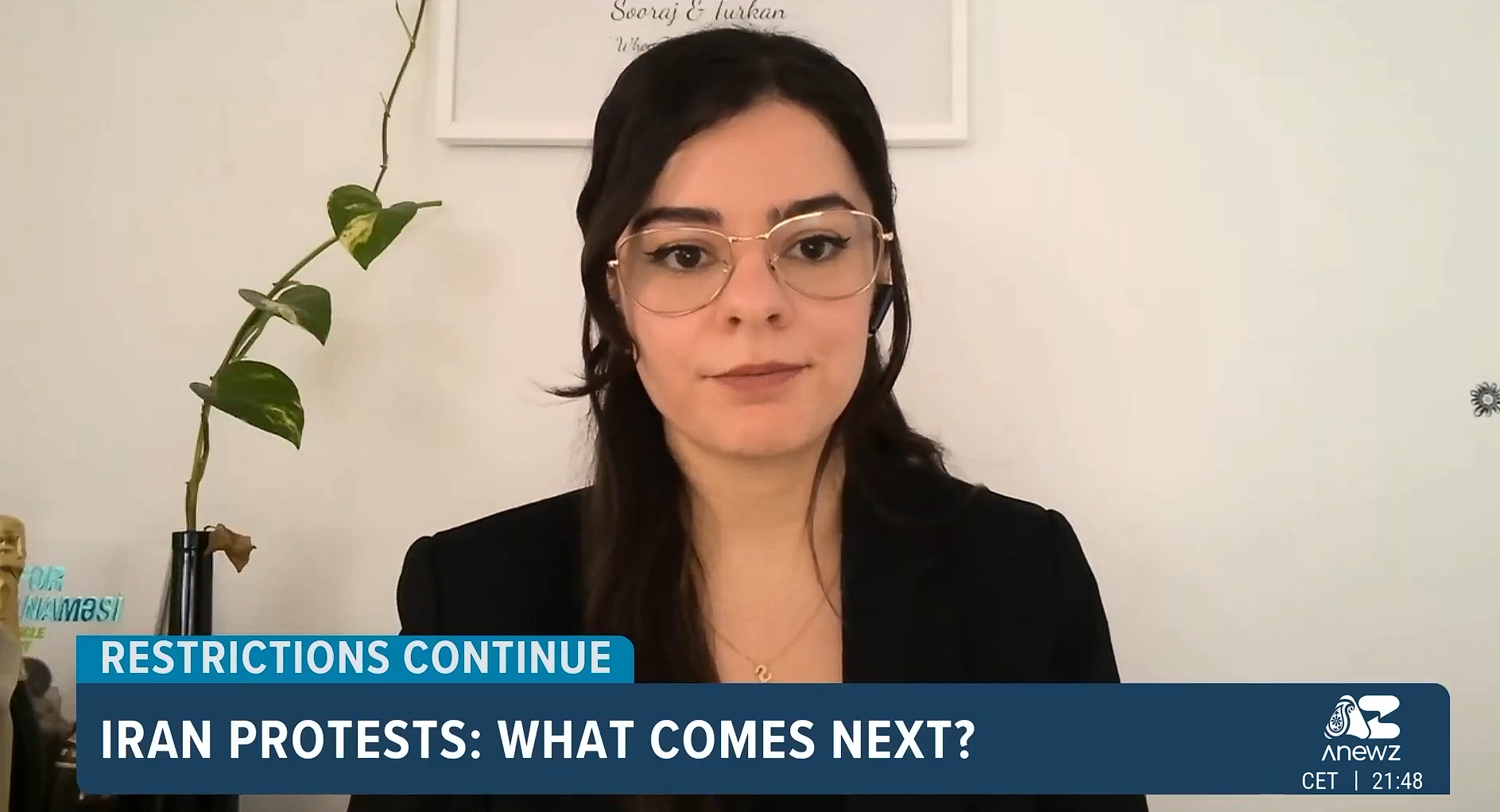
In January 21, 2026 IPEK Center Deputy Director Turkan Bozkurt told AnewZ that Iran has faced an unusually severe and sustained disruption of internet and digital communications, broader than many previous episodes. While some domestic connectivity appears to have partially stabilized in recent days, through more consistent mobile/landline service and intermittent internet access, families have largely been limited to brief windows to send short messages or make quick reassurance calls to relatives inside and outside the country.
Bozkurt said reporting from the ground remains deeply alarming and protest activity appears to have slowed significantly as authorities reassert control. The Islamic government has framed the unrest as driven by foreign backed armed actors. At the same time, casualty figures circulating publicly vary widely and remain difficult to verify due to restricted communications and limited independent access. She emphasized that any nationwide death toll should be treated as provisional until it can be corroborated through credible documentation and on the ground evidence.
She also emphasized emerging allegations of coercive practices affecting bereaved families, including reports that some authorities have conditioned the release of bodies on payments, sometimes described as “bullet fees,” with reported amounts ranging roughly from USD 1,000 to 5,000. While these claims are difficult to verify systematically, Bozkurt argued they reflect an environment of intimidation that compounds grief with financial and administrative pressure. Bozkurt noted large scale arrests reported, stressing that detention on this scale raises serious concerns about due process and the likelihood of harsh sentencing outcomes. She pointed to a rare public acknowledgment by Iran’s leadership indicating that “several thousand” people were killed which depicts the gravity of the crackdown.
Bozkurt urged audiences to interpret developments through Iran’s plural demographic reality, arguing that dominant narratives often flatten the country into a single Persian-Shi’a identity and overlook the experiences of non-Persian communities. Drawing on past episodes such as the 2022 “Women, Life, Freedom” protests and the reports published by the UN FFM as well as other human rights organizations, she argued that minority regions including Azerbaijani, Kurdish, and Baluchi areas tend to be disproportionately impacted by state violence and repression. Economic marginalization in these regions, she added, would make practices like “bullet fees” especially devastating for families facing chronic unemployment and poverty.
Looking ahead, Bozkurt outlined several possible trajectories such as incremental adaptation by the state through limited reforms to manage internal pressure. Or a more destabilizing scenario involves collapse and fragmentation, potentially escalating into prolonged low intensity conflict if questions of governance and representation in a multiethnic society are not addressed.